


Quality of Earnings: What South Florida Business Owners Should Know Before Selling
Senior Business Advisor | Transworld Business Advisors
A company might show $1 million in adjusted earnings.
Good. The real question is whether a buyer can reasonably expect the business to produce that $1 million again after the seller leaves.
That is what a Quality of Earnings analysis, usually called a QoE, is designed to examine.
A QoE looks behind the P&L. It looks at where the revenue came from, whether margins make sense, whether add-backs can be supported, how dependent the business is on certain customers, and whether anything in the financials is likely to become a problem during due diligence.
For a seller, this matters because buyers are not purchasing last year's tax return. They are buying future earning power. If you want a broader look at how your business is priced in today's market, see South Florida business valuation guidance.
What Is a Quality of Earnings Analysis?
The P&L tells us what was reported. A QoE asks what is behind it.
Suppose a Fort Lauderdale company reports $6 million in revenue and $1 million in EBITDA. That does not tell me whether one customer generated $2 million of the revenue. It does not tell me whether a large project will repeat. It does not tell me whether $700,000 of receivables has been sitting unpaid for six months. It also does not tell me whether the owner had $150,000 of legitimate one-time expenses that reduced earnings.
The goal is not to make earnings higher or lower. The goal is to determine what can actually be supported.
Why I Look at More Than One Year
I normally want to see several years of financial performance. One year can be misleading.
A contractor finishes a project in December and gets paid in February. A supplier invoice lands in January. A restoration company has an unusually strong storm year. The owner incurs a one-time legal expense.
Looking at three or four years can smooth out normal timing noise. But an average does not fix everything.
Suppose adjusted earnings are:
2023
$550,000
2024
$610,000
2025
$675,000
2026
$1,050,000
I want to know what happened in 2026. Did the company add recurring customers? Did pricing improve? Or did it land one unusually profitable project that may never happen again? Same earnings number. Different quality.
Revenue Growth Is Good. I Still Want to Know Why.
If revenue increased 25%, that sounds positive. Usually it is.
But a Broward service company that added 40 recurring customers has a different revenue profile from a company that landed one $1.5 million project. A Palm Beach distributor expanding into a new territory may have created sustainable growth. A restoration company coming off an unusually active storm season may not repeat it.
That distinction matters to a buyer.
Gross Margin Can Expose Questions Early
Suppose a contractor normally runs between a 38% and 41% gross margin. Then the latest year jumps to 54%.
Maybe prices increased. Maybe supplier costs dropped. Maybe the company moved into higher-margin work. Or maybe subcontractor expenses were classified differently or landed in another period.
I want the explanation before the buyer asks for it.
Add-Backs Are Where Deals Can Get Messy
Most sellers understand add-backs. Owner perks. Personal vehicles. Excess compensation. Family members on payroll. One-time legal or consulting expenses.
Some are legitimate. Some are aggressive. The real question is not whether we can put something in the add-back column. The question is whether a buyer or lender will accept it.
Take owner compensation. Suppose the owner receives $250,000 per year. If the buyer will personally replace the owner, that may be treated one way. If the company still needs a $150,000 general manager after closing, the full $250,000 does not disappear. Economically, the adjustment may be closer to $100,000.
A practical, illustrative point for sellers: a disputed $100,000 add-back at a four-times multiple can turn into a $400,000 purchase-price discussion. This is not a guaranteed outcome for every deal — it simply shows how much leverage sits inside a single contested add-back.
That is how re-trading starts.
Customer Concentration Can Change the Deal
Two companies can each produce $6 million in revenue and $1 million in EBITDA.
Company A
250 customers, none representing more than 5% of sales.
Company B
One customer represents 45% of revenue.
Not the same business. The buyer is going to want to know how sticky that relationship is. How long has the customer been there? Is there a contract? Can it be transferred? Is the relationship tied to the company or mostly to the owner?
Customer concentration may not change last year's EBITDA. It changes the risk attached to that EBITDA.
Accounts Receivable Can Tell Another Story
Revenue on the P&L and money in the bank are not always the same thing.
Suppose a company has $1 million in accounts receivable. If most of it is less than 30 days old, that may be normal. If $600,000 has been outstanding for six months, I want to understand why. So will the buyer.
The income statement may look the same in both cases. The quality of the revenue does not.
Cash Basis Versus Accrual Basis
A business may file its tax return on a cash basis while maintaining internal books on an accrual basis. That is not automatically a problem. But the difference should make sense.
A Boca Raton contractor may finish a project in December and collect the money in February. Revenue, expenses and cash can fall into different periods depending on the accounting method.
Over several years, some timing differences wash out. Large differences still need to be explained. If the tax return shows $4.5 million in revenue and the internal P&L shows $6 million, somebody is going to ask why. There may be a perfectly good answer — we just need to know it.
Selling a Business for $3 Million or More? The SBA Rules Change October 1, 2026.
Under SBA SOP 50 10 8.1, effective October 1, 2026, qualifying SBA 7(a) Initial Acquisition and Business Expansion transactions with a Business Purchase Price of $3 million or more will require the lender to obtain an independent Quality of Earnings analysis in addition to the business valuation.
The key point: the $3 million threshold is based on the business purchase price, not simply the SBA loan amount. Buyer equity or seller financing does not bring a $3.2 million business below the threshold. Separately valued owner-occupied real estate is excluded from the Business Purchase Price calculation for this requirement.
The formal QoE must also be independent and performed for the lender. The seller's recast or broker valuation does not replace it. Larger, more complex transactions like this are where the line between a business sale and a full merger & acquisition engagement starts to blur.
The SBA Cash Proof Requirement Is Where Preparation Matters
For qualifying transactions, the QoE will need to include a Cash Proof covering the trailing 12 months and the last two fiscal years.
That means the QoE professional will reconcile bank activity against the income statement and tax returns and investigate material differences.
This is where poorly organized financials can slow a transaction down. The owner has the tax returns. The bookkeeper has QuickBooks. The CPA has year-end adjustments. There may be multiple bank accounts. Add-backs may exist without clean backup.
Then the QoE team arrives after the LOI and starts asking questions. That is not when I want to discover the problems.
What Should a Seller Be Prepared to Provide?
For a larger transaction, I would expect a seller to be ready with items such as:
- Tax returns, P&Ls, balance sheets and current interim financials
- Bank statements for the periods being reviewed
- General ledger detail where needed
- Current A/R and A/P aging
- Payroll and owner-compensation support
- Backup for material add-backs
- Customer sales detail
- Related-party transaction information
- Explanations for major cash-versus-accrual differences
If gathering those records is difficult before going to market, it will be even harder once a buyer, lender and QoE team are all waiting. Preparing these records is part of the broader business selling process that sellers should work through before a listing goes live.
Can a QoE Reduce the Purchase Price?
It can.
Suppose a company is marketed using $1.5 million of adjusted EBITDA. A buyer agrees to a $6 million purchase price at four times EBITDA. Then financial due diligence supports only $1.1 million. At the same multiple, the discussion is now around $4.4 million.
The multiple did not change. The earnings did. That is a $1.6 million problem, in this hypothetical example.
In an SBA transaction subject to the new requirement, the lender must also use the QoE earnings in determining debt-service coverage — which is one way buyer financing affects a business sale, beyond just the purchase price.
A QoE Is Not a Business Valuation
They answer different questions.
Quality of Earnings
What earnings are supportable?
Valuation
What are those earnings worth?
If normalized EBITDA is $1 million and the market supports a 4.5-times multiple, the indicated value may be around $4.5 million. But if only $750,000 of EBITDA is supportable, the problem is not the multiple. It is the earnings.
You can apply the right multiple to the wrong number and still get the wrong value. For a full look at how value is estimated in today's market, see South Florida business-sale pricing and valuation guidance.
Do I Need a QoE Before Selling My Business?
Usually, no. Most sellers do not need to commission a formal QoE before going to market. And where SBA requires one, the lender must obtain its own independent report anyway.
What I do believe in is QoE readiness. Before taking a larger company to market, I want to know:
- Can we support the add-backs?
- Do the tax returns and internal financials reconcile?
- What does customer concentration look like?
- Are receivables clean?
- Can we explain major changes in revenue or margins?
The goal is not to perform the lender's QoE. The goal is to avoid discovering obvious problems after the LOI is signed.
What If My Tax Returns and P&Ls Don't Match?
Don't panic. It happens.
Cash-versus-accrual accounting, year-end CPA adjustments, inventory, depreciation and timing can all create differences. The important question is whether the difference can be explained. A legitimate reconciliation is one thing. A large difference nobody understands is another.
Should I Wait Until I Have a Buyer to Clean Up the Financials?
I wouldn't.
Once the LOI is signed, the clock starts. The buyer has attorneys involved. The lender is requesting documents. The QoE team may be sending questions. The seller still has a company to run.
That is not the best time to find out that nobody can reconcile last year's books or support a six-figure add-back. Prepare before the pressure starts — and lean on transaction coordination to keep the lender, buyer, CPA and attorney aligned once diligence begins.
What I Want to Know Before Taking a South Florida Business to Market
I don't expect perfect books. Very few privately held companies have them. I do expect the financial story to make sense.
If revenue jumped, I want to know why. If gross margin changed, I want the reason. If one customer represents a large percentage of sales, let's understand the relationship. If there is a six-figure add-back, let's support it. If the tax return and P&L are materially different, let's reconcile them.
And if the expected purchase price is $3 million or more and SBA financing may be part of the buyer pool, I want to think about QoE readiness before the business ever reaches an LOI.
There is a big difference between answering a question and discovering a problem.
Quality of Earnings in Broward, Miami-Dade and Palm Beach County
The issues vary by business.
A Broward County construction company may have project timing, subcontractor and receivable issues. A Miami-Dade distributor may have inventory, supplier concentration and working-capital questions. A Palm Beach County healthcare or professional-services company may have different revenue, owner-compensation or customer-retention concerns.
I start with the economics of the business. How does it make money? When does it get paid? What expenses are necessary? How dependent is it on the owner? How concentrated are the customers? What changes after closing?
Those questions usually tell us where to look.
Thinking About Selling Your Business?
If you are considering selling a privately held business in Broward County, Miami-Dade County or Palm Beach County, particularly one with an expected value of $3 million or more, it makes sense to understand the financial issues a serious buyer and lender are likely to examine before the business goes to market.
My role is not to perform the lender's Quality of Earnings analysis. My role is to help determine what the business is likely worth, review the earnings supporting that value, identify issues likely to receive scrutiny during due diligence, and prepare the transaction before those questions arrive.
If you are thinking about selling and want to understand how a buyer is likely to look at your financials, that is a good place to start.
About the Broker

Source Note: SBA information above reflects SOP 50 10 8.1, Appendix 15 — Changes of Ownership Transactions, effective October 1, 2026. As of this article's publication date, SOP 50 10 8 remains the current operative version. See the official SBA SOP 50 10 guidance for the current and forthcoming versions.
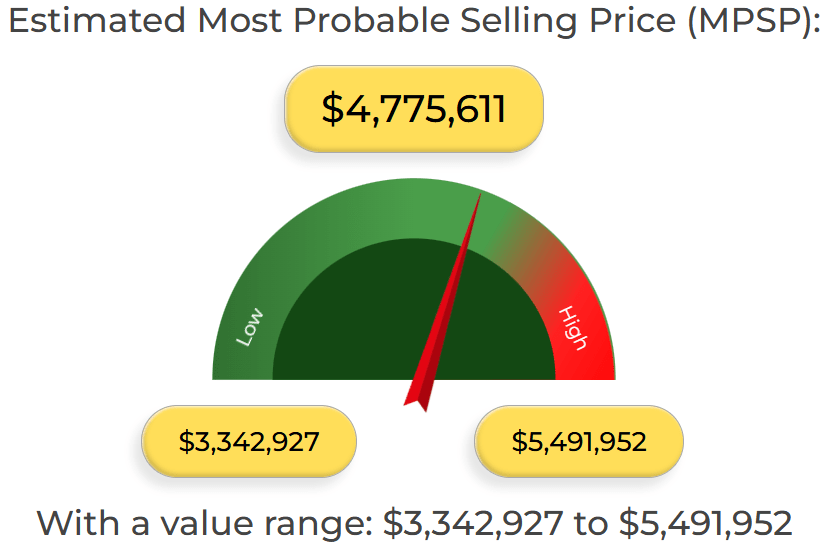
Free Business Valuation Calculator Results
Get an accurate, data-backed valuation estimate in seconds. This is a sample of the valuation range you'll see after using our calculator:

Why Business Owners Trust my Calculator:
-
1Instant Business Valuation Range No waiting get your estimated business value right away.
-
2Data-Driven Accuracy Calculations are based on thousands of real private business sales and market insights.
-
3Built for Owners Ready to Sell Whether you're planning an exit, seeking investors, or just curious, this tool gives you a realistic snapshot of your business's current value.
Call Today to Speak with a Broker 305-608-6761
You might want to see
How to Calculate SDE and Why It Can Make or Break Your Business Sale
Business Valuation Calculator - Real Comps & Florida Broker Support (MPSP Alternative to CalcXML)